University of Dundee researchers have made a significant breakthrough in the global effort to combat tuberculosis.
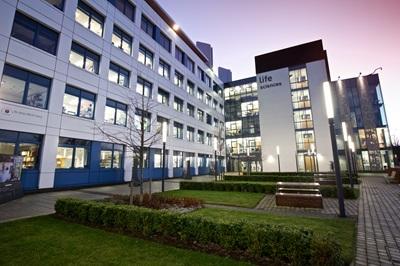
Researchers from the University’s Faculty of Life Sciences have unveiled a new pre-clinical drug candidate with the potential to lead to new therapies and treatments for the killer disease.
It follows more than a decade of research by the University’s Drug Discovery Unit (DDU), with support from the Gates Foundation.
As promising data began to emerge from the DDU, in 2022 the team brought the research into a pre-existing collaboration with pharmaceutical company GSK, to evaluate and refine potential pre-clinical candidates. Through this joint effort, a promising compound has now been identified: DDU384.
This candidate will now undergo further studies, led by GSK with support from the Gates Foundation and other collaborators. as a potential new therapy for tuberculosis.
“Identifying DDU384 is an incredibly exciting development and potentially significant in the battle against TB,” said Dr Laura Cleghorn, TB Portfolio Lead at Dundee.
“As a global killer that is growing increasingly resistant to current treatments, the urgency to find new drugs cannot be overstated.
“There is high attrition in TB drug discovery, with very few of the hundreds of compounds identified each year as potential anti-TB drugs making it to clinical development. That is why the emergence of this compound is so significant.”
The World Health Organization cites TB as the world's top infectious killer, claiming nearly 1.23 million lives in 2024. It is caused by Mycobacterium Tuberculosis, a bacteria that has continued to evolve and survive in a variety of pharmacological conditions. The disease is commonly spread through coughing and sneezing and while TB is present throughout the world, people who fall ill with the disease are disproportionately from low- and middle-income countries.
The Dundee team and GSK are both members of the Tuberculosis Drug Accelerator (TBDA) and European Regimen Accelerator for Tuberculosis (ERA4TB), consortia that bring together global health organisations, pharmaceutical companies, research institutes and academic partners with the aim of accelerating the identification of new candidates to treat tuberculosis.
Developing drugs to combat TB is particularly difficult due to the nature of treating the illness. To prevent resistance, all TB drugs are given in combination, meaning any new agent must work effectively on its own and in conjunction with other drugs. Another key consideration for researchers is the aim to reduce treatment times, with current regimens for drug-susceptible pulmonary TB requiring a minimum period of four months.
Preliminary data suggests DDU384 has the potential to meet these challenges and having been approved as a candidate for preclinical development, the compound is now moving into the next phase of evaluation as a promising therapeutic candidate.
David Barros-Aguirre, Head of Global Health Medicines R&D, GSK, said, “GSK is proud of our long-standing collaboration with partners on new TB treatment discovery and development. The identification of DDU384 is an important step forward and we look forward to progressing this latest innovative therapy.”