The University of Dundee will host the first UK trial of a new way of delivering an immunotherapy treatment, potentially improving access for cancer patients while saving the NHS millions of pounds each year.
It is well established that immunotherapy drugs – delivered in conjunction with chemotherapy – are longer-lasting and more effective than chemotherapy alone in multiple cancers. Typically, patients would receive both treatments for several months before continuing with immunotherapy for up to two years.
However, the way that immunotherapy is currently delivered – intravenously in a hospital setting – is inconvenient for patients, takes considerable nursing resources and is costly for the health service.
The new worldwide trial will see researchers from the University’s Faculty of Health work with BeOne Medicines UK and collaborators across the globe to test the effectiveness of delivering the immunotherapy drug tislelizumab to oesophageal and gastric cancer patients via a simple subcutaneous injection.
If the trial is successful, it is possible that in the future immunotherapy could be delivered in the community closer to patients’ homes, at a fraction of the time and cost it currently takes to administer. Looking further ahead, patients may even be able to inject themselves at home, similar to the way many diabetics take their medication after it is delivered in the post.
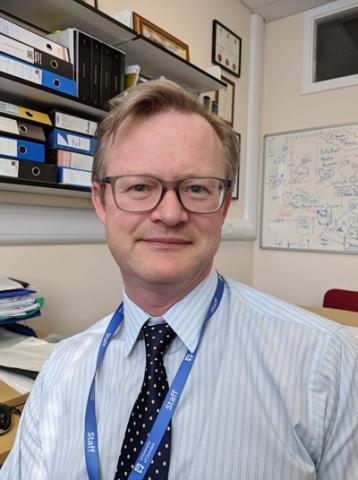
Professor Russell Petty, Chair of Oncology at the University, is Chief Investigator for the UK arm of the trial, which will also take place at sites across China, Europe and the United States.
He said, “We are delighted to have been chosen to lead this project in the UK and that Dundee will be the first UK centre to recruit patients for the trial. This is all about trying to bring the benefits of existing and new drugs to as many patients as possible as quickly as possible.
“Tislelizumab has been used to treat certain types of cancers for years. However, the way it is currently administered increases demand on hard-pressed NHS oncology services. At the moment, patients need to be hooked up to an intravenous drip for one-two hours. A simple injection would take around 10 minutes, meaning up to 10 patients would be treated in the same time it takes to treat one at present.
“It would also mean that, in the future, patients need not attend hospital for each dose, which could be delivered in local medical centres or even at home. This would help reduce waiting lists and treatment costs at a time when the NHS is under great strain.
“However, before this can become a reality, we have to prove that the new injection that has been developed works at least as well as intravenous administration. We will be working with patients on the trial to check that the treatment is as effective and that there are no additional side effects.
“In theory, this could work for other immunotherapy drugs and cancers but careful studies such as this one need to be carried out to ensure safety and efficacy.”